Last Update: April 2026, Otison
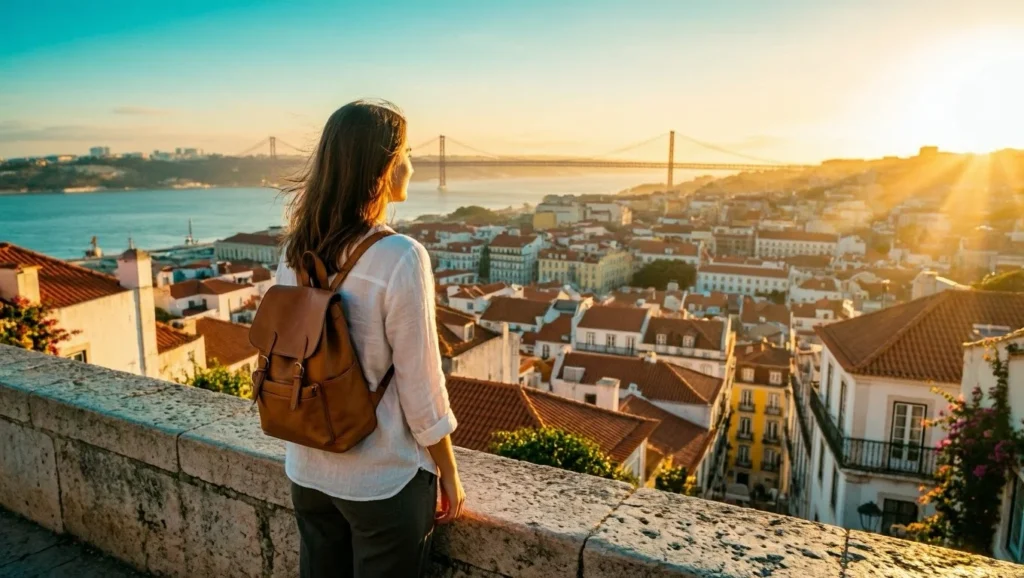
The night before my first solo flight to Lisbon, I sat on my bedroom floor with three different packing cubes, a printed itinerary I’d already memorized, and a knot in my stomach that wouldn’t untie. I’d traveled before. Just never alone. The difference felt enormous.
What I didn’t know then was that most of my anxiety came from preparing for the wrong things. I’d obsessed over packing lists and hotel star ratings, but I hadn’t thought about what I’d actually need when things went sideways.
They did, not catastrophically, but enough to teach me that the solo travel tips for beginners you actually need focus less on what to pack and more on how to move through uncertainty with a clear head.
Eight years and forty countries later, I can tell you this: your first solo trip won’t be perfect. But it can be safe, meaningful, and more manageable than the knot in your stomach is telling you right now.
The solo travel market hit $549.78 billion in 2025, and it’s expected to triple to $1.6 trillion by 2033 (Grand View Research). If you’re nervous, you’re in good company: millions are already out there doing it. What follows are the six lessons I learned the hard way, so you don’t have to.

Solo Travel Tips: Choose Your First Destination Intentionally (Not Just Cheaply)
I picked Lisbon for my first solo trip because flights were cheap and I’d seen beautiful photos on Instagram. That worked out fine.
Portugal is consistently ranked among the most accessible destinations for first-time solo travelers, but I got lucky.
Choosing based on price alone is how you end up in a city where you don’t speak the language, can’t read signs, and discover too late that your neighborhood feels unsafe after dark.
Most solo travelers now pick destinations for safety, not just price, says Atlys. That’s a smarter filter. For your first trip, look for places with solid tourism infrastructure, reliable public transit, and a reputation for being solo-traveler friendly.
41% of first-time solo travelers stay domestic, but if you’re going abroad, start with Lisbon, Chiang Mai, or (with smart neighborhood picks) Mexico City. All three have great infrastructure, solo-traveler scenes, and easy adventures for beginners.
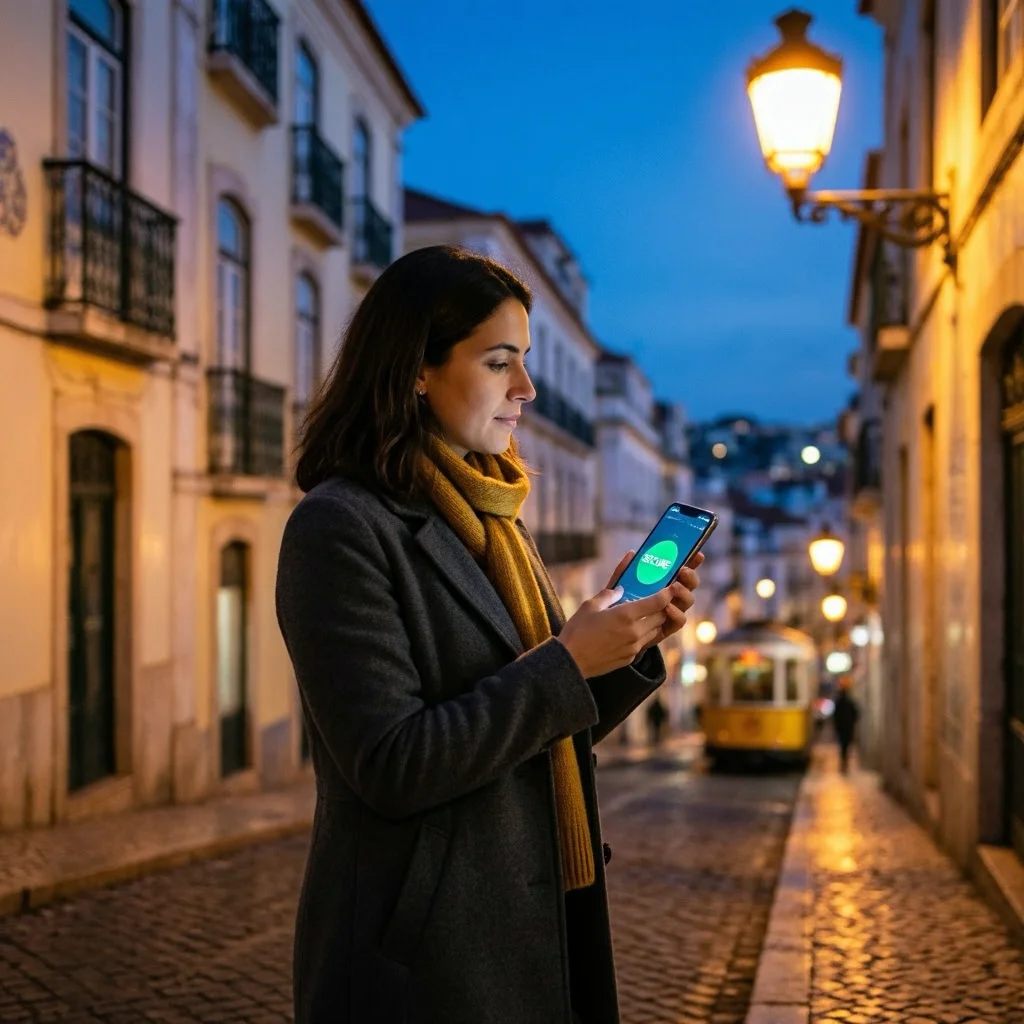
This is where tech becomes useful without being overwhelming. AI like GeoSure provide real-time safety scores at the neighborhood level, breaking down metrics for crime, health risks, and even nighttime safety.
Before you book: zoom into the actual streets around your accommodation. A four-star hotel in the wrong neighborhood still puts you in the wrong neighborhood.
Among all the solo travel tips about destination selection, this matters most: start with intention, not just a good deal. Your first solo trip sets the template for how you’ll travel for years. Make it a place that meets you where you are, not where you think you should be.
Solo Travel Tips: Share Your Itinerary Like a Pro, Not Just a Text to Mom
The first time I told my mom I was traveling alone, she asked me to “check in when I landed.” I sent one text from the Lisbon airport and then disappeared into my trip for nine days. It didn’t occur to me that she spent most of that time wondering if I was okay.
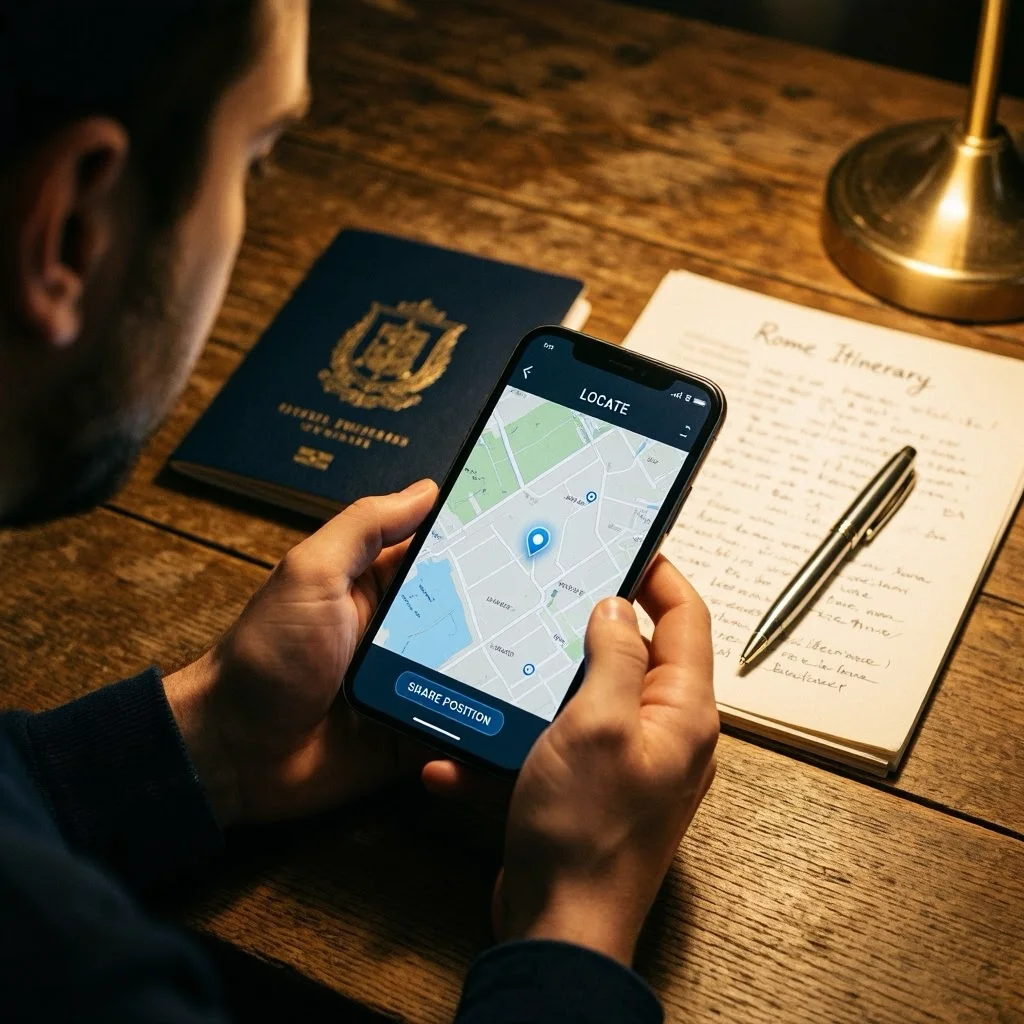
The check-in buddy system is one of those solo travel tips that sounds basic until you need it. You designate one person at home who gets a copy of your full itinerary, accommodation addresses, flight details, and daily plans, and you establish a regular check-in rhythm.
Not a surveillance system, simply a reliable thread back home. Just a simple “I’m good” message every day or two.
The right tech makes solo travel smoother, here has two, each tool serves a different purpose:
Use bSafe or Google’s location sharing to let someone track you hands-off, perfect for late arrivals or solo hikes.
Before your trip, sign up for STEP (free): it connects you to the nearest U.S. embassy and sends real-time safety alerts. These are different tools for different purposes, both worth setting up before you leave.
This is one of the solo travel tips that separates traveling solo from traveling isolated. There’s a meaningful gap between those two things.
Solo Travel Tips: Get Real Travel Insurance (Not the Cheapest Option on the Page)
I didn’t buy travel insurance for Lisbon. Nothing bad happened, so I kept skipping it on the next few trips. Then I got food poisoning in Bali, which sent me to a private clinic for two nights.
The clinic was small and efficient, not the kind of place you imagined needing, in the country you’d specifically chosen to feel free.
I spent two nights with an IV drip, surrounded by the particular quiet of being ill somewhere you don’t speak the language well. When they discharged me, the receptionist handed me a bill for $1,400 USD. I bought travel insurance the next day.
Here’s what most beginner solo travel tips won’t tell you: standard travel insurance in 2026 is often inadequate.
Cheap travel insurance covers cancellations and lost bags, but skips what solo travelers really need: medevac, cyber theft protection, and telehealth when you’re sick in a foreign country.
Solo travelers now make up 70% of World Nomads’ policies (up from 68% in 2022 and 69% in 2023). The trend is consistent and rising. What it tells you is not just that solo travel is growing, but that experienced travelers understand the safety net it requires.
For solo travel insurance, prioritize:
- Remote medical help
- Coverage for electronics (critical if you work remotely)
- Repatriation in emergencies.
Good solo travel insurance covers: medical emergencies, stolen gear (especially if you WFH), and getting home in a crisis.
Some newer policies even cover disruptions caused by climate-related events, which matters more every year. Consider checking CDC travel health notices before you travel to understand health risks specific to your destination.
I don’t think about insurance as a cost anymore. I think about it as the thing that keeps a bad day from becoming a ruined trip. Read the fine print. Know what’s excluded. And don’t pick the cheapest option just because it checks a box.
Solo Travel Tips: Stay Connected Smarter With eSIMs, Offline Maps & Data Backup
In Mexico City, my phone died in a neighborhood I didn’t know, at night, with no way to pull up my hostel address or call a ride.
I’d been relying entirely on my phone for navigation, communication, and booking. But I hadn’t planned for the moment when the battery hit zero, and I didn’t have a backup.
Connectivity is one of the foundational solo travel tips when you’re traveling alone. Not for Instagram. For safety, navigation, and the ability to solve problems in real time.
Most people approach it wrong; they either pay for expensive roaming plans or assume free wifi will be enough.
The smarter approach, and one of the solo travel tips I now use religiously, is a three-layer system.
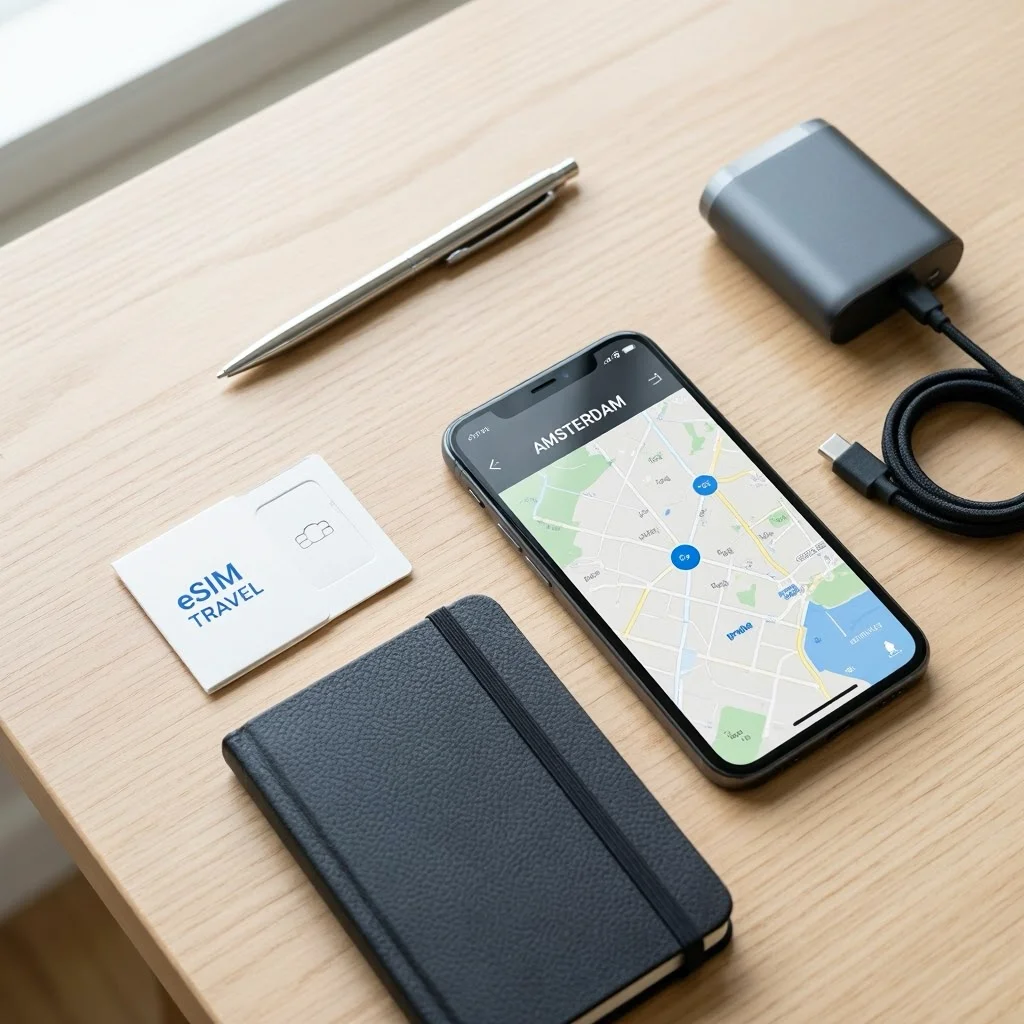
First, get an eSIM before you leave. It’s a digital SIM card that activates a local data plan the moment you land, no physical card swap required. I use it in every country now. It costs a fraction of roaming fees, and it works immediately.
Second, download offline maps before you leave:
For offline maps, Organic Maps wins: free, open-source, no ads, no paywalls. Google Maps also lets you save areas offline (via settings), but it’s not as robust as a dedicated app. When your data fails, and it will, you can still navigate.
Third, back up your essential documents and contacts somewhere that doesn’t require the internet. I keep screenshots of my accommodation addresses, emergency contacts, and insurance details in my phone’s photos. Low-tech, but it works when nothing else does.
Among all the solo travel tips about technology, this one matters most: staying connected isn’t about being online constantly. It’s about making sure you’re never completely cut off when you need help.
Solo Travel Tips: Navigate Social Situations Without Faking Extroversion
The hardest part of my first solo trip wasn’t safety or logistics. It was sitting alone at dinner the first night, convinced everyone in the restaurant was staring at me. They weren’t. But the discomfort was real, and no packing list prepares you for that.
How do I meet people when traveling alone? This is one of the most common questions I hear from people reading solo travel tips for the first time.
Here’s the truth: you don’t have to become a different person to travel solo. If you’re introverted, you can stay introverted. The goal isn’t to force yourself into hostels and pub crawls if that’s not who you are. It’s to find the kinds of social interactions that feel natural to you.
I’m not naturally extroverted, but I’ve learned that structured social settings, guided walking tours, cooking classes, and coworking spaces take the pressure off.
You’re there for a reason other than making friends, which paradoxically makes it easier to connect. 67% of solo travelers book at least one local guided tour. It’s a common strategy because it works.
Apps like Meetup or platforms like Viator and GetYourGuide let you find small-group activities that match your interests. You show up, you participate, and if you click with someone, great. If not, you still had the experience.
The quieter version of this, and one of the solo travel tips I use most often, is coworking spaces. Remote workers understand the balance between being around people and being left alone to focus. You’re not obligated to socialize, but the option is there if you want it.
Solo travel doesn’t mean lonely travel. But it also doesn’t mean you have to perform a version of yourself that doesn’t fit. Find your rhythm, and the right connections will happen on their own.

Solo Travel Tips: Trust Your Instincts, And Back Them Up With Data
Late one night in Mexico City, I was walking back to my Airbnb when I got a gut feeling that something was off.
The street was too quiet, the lighting was poor, and a guy at the corner was watching me a little too closely, the orange glow of his cigarette brightening each time he took a drag. I turned around, took a longer route, and nothing happened. Maybe I overreacted. Maybe I didn’t.
Is solo travel safe for first-timers? This is the question behind almost every search for solo travel tips. The answer is yes, with preparation.
Your instincts matter, but you can also back them up with real-time data:
Use Noonlight to set a safety timer for sketchy moments, walking alone at night, rideshares, or unfamiliar areas. If the timer runs out without you checking in, it alerts local authorities to your location.
GeoSure’s nighttime safety scores dig deeper than any travel guide. It won’t make decisions for you, but it gives you information that sharpens your instincts instead of ignoring them.
The other thing worth knowing: scams targeting tourists are getting more sophisticated, some even using AI and deepfake technology. If an offer feels too good, a message feels off, or someone’s pushing you to make a fast decision, slow down. Trust takes time. Scams rely on urgency.
Solo travel teaches you to listen to yourself in a way that group travel doesn’t. There’s no one else to defer to, no consensus to hide behind. That’s uncomfortable at first. But it’s also one of the most valuable skills you’ll build, in travel and beyond.
Quick Reference: Solo Travel Tips Recap
Before you close this tab, here are the six solo travel tips that actually work, distilled:
- Research destination safety profiles using apps like GeoSure before booking, not just country-level advisories
- Set up a check-in buddy system with a shared itinerary and regular contact schedule
- Purchase comprehensive travel insurance with medical evacuation, cyber theft coverage, and telehealth access
- Use eSIMs for instant connectivity plus offline maps for backup navigation when data fails
- Join structured social activities (walking tours, coworking spaces, cooking classes) that match your personality
- Trust your instincts and reinforce them with real-time safety apps like Noonlight and Smart Traveler
Frequently Asked Questions
How can first-time solo travelers create a thoughtful solo travel budget?
Research average daily costs (lodging, food, transport) for your destination, add a buffer for surprises, and track spending lightly – without stress. A flexible budget helps you enjoy the trip while staying mindful of expenses.
What helps when waves of solo travel loneliness appear during a first trip?
Instead of resisting loneliness, lean into it: people-watch in a café, journal, or simply rest. These moments often deepen self-awareness and make future connections more meaningful.
How does learning basic local phrases and customs enrich a first solo trip?
Simple greetings, “thank you,” and cultural norms (like tipping or dress codes) show respect and open doors to warmer interactions, helping you feel more connected than just a tourist.
In what ways can sustainable solo travel practices shape planning in 2026?
Stay longer in fewer places, support local businesses, and reduce waste (e.g., reusable bottles, slow transport). Small choices align travel with values, making the journey feel more purposeful and less consumptive.
Final Thought
Your first solo trip will probably have at least one moment that doesn’t go as planned. That’s not a bug, it’s the entire point. You’re learning how to solve problems on your own, how to sit with discomfort, and how to trust that you’re capable of more than you thought.
The solo travel tips for beginners that matter most aren’t about avoiding mistakes. They’re about building the kind of foundation, practical, technical, emotional, that lets you handle the mistakes when they happen. You don’t need to be fearless. You just need to be prepared, connected, and honest with yourself about what you actually need.
Start small. Choose wisely. Share your plans. Stay connected. And then go.